Development and usability evaluation of a mHealth application for prehospital triage
Triage refers to a dynamic decision-making process which prioritizes patients and their needs for medical interventions1,2. Medical triage can be classified into two main categories, including: hospital triage and prehospital triage. Today, what affects human life and health the most are medical emergencies following chronic health conditions, accidents, natural, or man-made disasters. In times of emergencies when demand exceeds resources, allocating the most available resources to those who need them more than others and saving as many lives as possible can be a game-changing process, which results in a significant reduction in mortality and morbidity following efficient prehospital care3,4,5. In prehospital settings, paramedics would be able to provide patients and injured who are in more critical condition with care and the utmost treatment possible, considering resource limitations, including time, human force, and equipment3,6.
The prehospital healthcare process commences at the time of the incident and continues up to the patient’s arrival at healthcare facilities. So, immediate, efficient, and structured prehospital care can considerably reduce mortality and disability rates5. Accordingly, reports show that about 24 million citizens in Low- and Middle-Income Countries (LMICs) face potential death due to inefficient and inadequate prehospital cares annually. These numbers signify the importance and necessity of a systematic, well-structured prehospital triage process7. Not to mention that the prehospital triage is now recognized as a key factor in an efficient emergency medical management8.
Over-triage and under-triage are two of many problems associated with poor triage. For paramedics and other emergency responders, not being able to collect, process, or measure data related to the patient and the accident, strongly affects the ultimate decision, which would be the suitable triage level and consequently, interventions following initial diagnosis. In better words, if a patient is tagged with the wrong triage level indicating an undesirable urgency level, they may receive care less or more than needed, and that is when valuable resources are being tragically wasted. In addition, when providers present at a Mass Casualty Incident (MCI) scene expecting a number of casualties, the scarcity of resources becomes a major, life-threatening problem and puts many lives at stake or susceptible to irreversible health conditions, and of course, unnecessary longer hospitalization if being transported to hospital on time9,10.
Owing to the fact that by providing patients with proper, timely care, especially under emergency circumstances, their chance of survival and health condition would improve, administering triage properly and determining the apt triage level would be even more favorable and crucial than a potential final diagnosis affirmed by in-hospital physicians11. Therefore, one way to minimize time assigned for performing emergency critical measures and care, yet improve the quality aspect, is to employ cutting-edge mobile technologies.
Over recent years, the Internet and mobile technologies have notably altered people’s lifestyle as well as workflows. Human resources working in health and medical domains tend to use mobile devices, including PDAs, smartphones and tablets, more than ever to accomplish their tasks12,13. “mHealth”, which is a subset of the umbrella term “eHealth”, refers to the use of Information and Communication Technology (ICT), and related devices, e.g., smartphones, in order to collect, transfer, and access health information and services12,13. The term “mHealth” has been widely utilized in all domains, including education, management, monitoring, diagnosis, and treatment14,15. In 2019, WHO simply defined mHealth as “The use of mobile and wireless technologies to support health objectives”16 One of the most prominent achievements in mHealth is the invention of mobile health applications run on smartphones17.
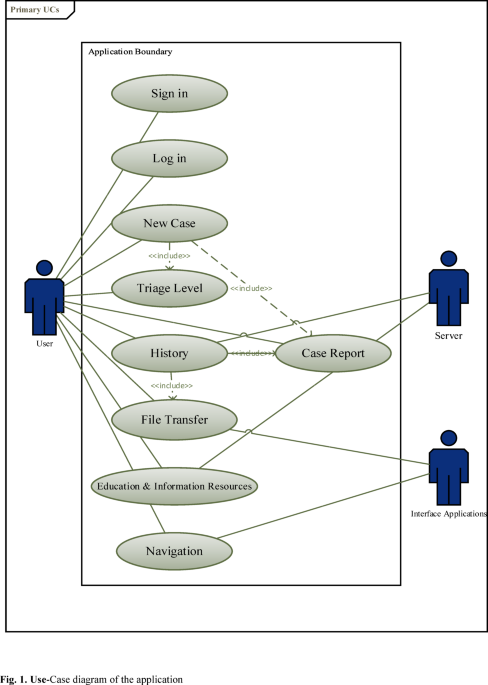
One practical and effective solution to manage the aftermath and limit damages following an incident or an emergency health condition is to provide victims with timely, adequate and high-quality care, including prehospital triage. Hence, in order to optimize the initial attempts and clinical measures, mobile applications can be widely used by first responders at the scene and during transport time18,19. Collecting patient information and clinical data on a real-time basis20, determining the appropriate triage level using algorithms21,22, and the ability to select body regions indicating trauma types23 are some of the many functions that a prehospital triage mobile application can execute. Currently, there are numerous mobile applications for prehospital care which are primarily designed to triage specific cases such as cardiac or burn emergencies24,25,26,27. To enhance patient care, support diagnostic and documentation processes, various applications are equipped with tools to collect and organize data associated with dispatch calls28,29. Time plays a crucial role in prehospital settings, where patients need to be treated and/or transferred promptly to prevent further injuries or life-long chronic disabilities. Therefore, there are applications developed to find the optimum route for patient transfer.
Considering the importance of an accurate prehospital care and triage, as well as the wide range of services offered by aforementioned applications and their impact on patients’ clinical status as well as paramedics’ performance, it is essential to design mobile applications, supporting first responders in prehospital settings. As paramedics and EMT technicians are the primary users of such applications, it is necessary for developers to take their needs into consideration. Despite the significance of prehospital care and how a simple data or intervention can alter patient’s life quality or affects paramedics’ performance, studies addressing the use of mobile applications in prehospital setting are limited. In addition, comprehensive applications for prehospital setting are yet limited or with poor functions, which reflects the meagre participation of experts and users in the development of such applications, which can be a consequence of restricted organizational policy and strategies as well as lack of investors. On the surface, a great majority of applications in prehospital care domain at the time of conducting this research were developed mainly for educational purposes and few of them aimed to assist paramedics only with especial cases like stroke or burn emergencies24,25,26,27. Therefore, the present study was conducted to develop and evaluate a mobile application for prehospital triage with a focus on all medical cases including trauma specific cases, burn and cardiac emergencies. The informational forms provided in the application support almost all medical emergency cases with detail description.
link